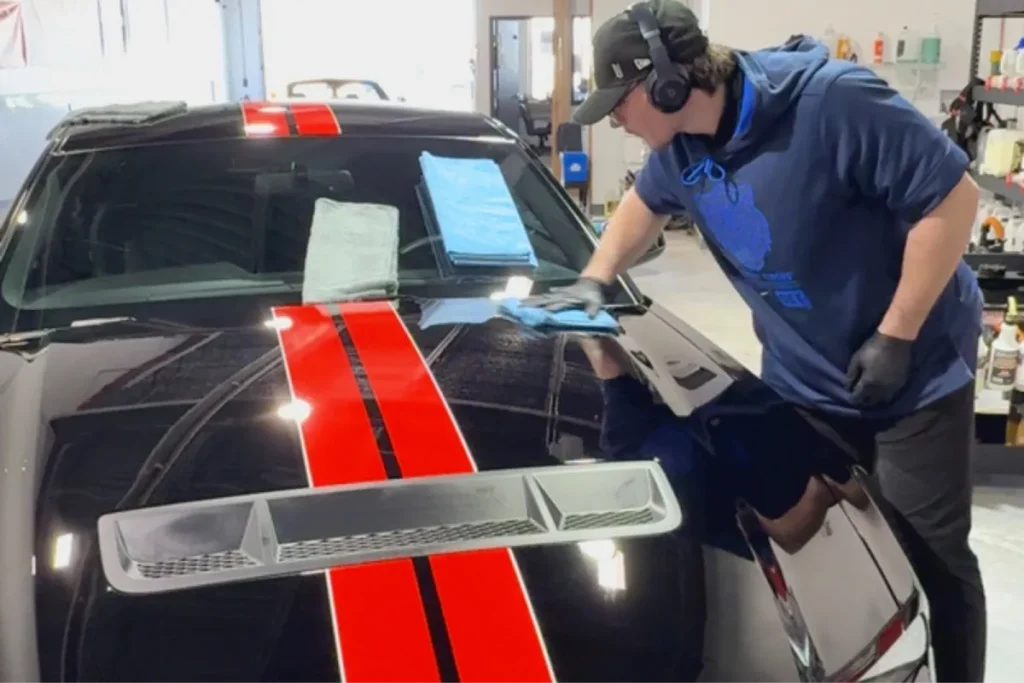
Paint correction restores clear coat by using specialized abrasives, controlled machine polishers, and tailored pad combinations to level surface defects like swirl marks and micro-scratches. Rather than stripping away significant paint depth, professional correction selectively removes only microscopic amounts, typically 1 to 3 microns out of a 35 to 50-micron clear coat, to smooth the surrounding area. By measuring depth with digital gauges and using precision dual-action polishers, technicians safely eliminate flaws while preserving maximum structural integrity and UV protection.
Clear Coat Thickness vs. Paint Correction Levels: A Comparative Breakdown
Modern automotive paint systems consist of an electro-coat primer, a pigmented base coat, and a protective outer clear coat layer. The clear coat acts as the primary shield against ultraviolet radiation, oxidation, bird droppings, and mechanical friction.
To visualize how safe paint correction works, consider how different levels of correction impact clear coat depth:
| Metric / Stage | Factory Clear Coat Baseline | Light Paint Correction (1-Step) | Medium Paint Correction (2-Step) | Heavy Paint Correction / Wet Sanding |
| Typical Clear Coat Thickness | 35 to 50 Microns (~1.5–2.0 mils) | Removes 1 to 2 Microns | Removes 2 to 4 Microns | Removes 4 to 8+ Microns |
| Defect Removal Target | N/A (Factory Finish) | 50%–70% Light Swirls & Glaze | 80%–95% Deep Swirls & Scratches | 95%+ Isolated Deep Scratches & Heavy Oxidation |
| Abrasive & Pad Combination | N/A | Finishing Polish + Foam Finishing Pad | Medium Cut Compound + Wool/Microfiber Pad + Polish Stage | Heavy Compound + Cutting Pad / Micro-Abrasive Sanding Discs |
| Clear Coat Impact | 100% Retained | Negligible Impact (~95%+ Preserved) | Controlled Reduction (~90%+ Preserved) | High Material Removal (Requires Thickness Gauge Monitoring) |
| Recommended Frequency | N/A | Yearly or As-Needed | Once Every 3–5 Years | Once in Vehicle Lifetime (Extreme Restoration Only) |
A single Post-it note measures approximately 75 microns thick. Considering factory clear coats range from 35 to 50 microns, a multi-stage paint correction in Shelby Township service removing just 2 to 3 microns leaves over 90% to 95% of your original clear coat fully intact.
5 Precise Steps Professional Detailers Take to Preserve Clear Coat
Preserving clear coat strength while restoring optical depth is an art grounded in physical science. Certified detailers rely on structured operational workflows to ensure material removal remains at absolute minimum thresholds:
- Digital Ultrasonic Paint Depth Gauge Auditing: Before any polishing pad contacts the vehicle, technicians conduct a multi-point paint inspection across every body panel. Digital depth gauges measure total film thickness down to the single micron to identify thin factory repaints, previous aggressive correction passes, or high-risk edge zones. During a recent audit for a client in Rochester, our team discovered thin clear coat on a custom hood, allowing us to adjust our approach before polishing.
- Paint Hardness Diagnostic & Test Spot Profiling: Clear coat formulations vary significantly between vehicle manufacturers. German automotive paints tend to be rigid and hard, whereas Japanese imports feature soft, pliable clear coats. Technicians conduct a 1×1 foot “test spot” using the least aggressive pad and compound combination first to establish the exact baseline needed for maximum clarity with minimal material loss.
- Controlled Dual-Action (DA) Polisher Movement: Traditional high-speed rotary polishers create intense localized friction, which can overheat paint and quickly burn through clear coats. Professional studios rely primarily on modern dual-action (DA) random-orbital polishers that rotate and oscillate simultaneously on two separate axes, dispersing thermal energy evenly across the surface.
- Progressive Micro-Abrasive Technology (SMAT/DAT): Professional polishing liquids utilize Super Micro-Abrasive Technology (SMAT) or Diminishing Abrasive Technology (DAT). These microscopic abrasive particles level sharp scratch edges cleanly without scouring deep gouges into the underlying protective layer.
- Constant Pad Cleaning and Surface Temperature Monitoring: As polish works across a panel, spent compound and removed clear coat residue collect within pad fibers. Technicians blow out pads with compressed air after every pass and monitor panel temperatures to maintain paint stability and uniform cutting rates.
Essential Paint Correction Terms & Technical Specifications
Understanding standard industry terminology empowers vehicle owners to evaluate service quotes and understand paint health metrics:
Common Industry Myth: “Paint Correction Scrapes Away Your Paint Until the Scratch Is Gone”
The Myth: Many vehicle owners believe that removing a scratch requires grinding away the clear coat down to the absolute bottom of the scratch valley.
The Reality: A scratch is simply a V-shaped groove carved into the clear coat that refracts light unevenly, making the flaw visible to the human eye.
Leveling vs. Deep Removal: Professional paint correction in Shelby Township, MI smooths and rounds the sharp, harsh upper edges of the scratch valley. By gently beveling those edges and leveling only a tiny fraction of a micron off the surrounding surface, light passes directly through the clear coat without scattering. The scratch becomes completely invisible to the human eye, all while leaving over 90% of your protective clear coat structurally sound.
Applying Our Specialized Solutions for Superior Finish Preservation
Restoring your vehicle’s finish should never compromise its long-term paint health. When you bring your vehicle to our shop, our primary goal is to restore the depth, clarity, and gloss of your paint while ensuring your clear coat remains structurally sound.
Using advanced polishing methodologies, we systematically eliminate scratches, swirl marks, and oxidation through careful, measured steps. Our team utilizes precision techniques for a flawless, like-new finish that significantly enhances paint depth and vehicle aesthetics. This meticulous process helps boost resale value and long-term appearance, so you can enjoy a smoother, cleaner surface that lasts.
This high level of care takes place where craftsmanship, passion, and precision meet. Performed by certified professionals who are genuinely detail-obsessed, our reputation is built on over 200 five-star reviews. It’s why our paint restoration services remain trusted by Shelby Township’s most discerning drivers.
Whether servicing a daily driver in Utica or perfecting a luxury sports car in Macomb, our technicians perform multi-stage depth audits before, during, and after polishing. This level of precision guarantees that every Shelby Township, MI paint correction project achieves maximum optical gloss while safeguarding factory paint health.
Experience Flawless Surface Restoration at K&D Auto Spa – Detailing
Your vehicle is a significant investment that deserves meticulous care, technical expertise, and uncompromising standards of craftsmanship. At K&D Auto Spa – Detailing, our certified, detail-obsessed team combines warm, customer-centric service with advanced paint diagnostic tools to transform your finish safely. Whether you are looking for premium paint correction or long-term ceramic protection, we take pride in delivering results that instill complete confidence and peace of mind.
Want to restore your vehicle’s depth and achieve a mirror-like reflection? Contact us today for a quote. Discover our paint correction services and request your custom quote now!
Frequently Asked Questions
How much clear coat is removed during a standard paint correction?
A professional 1-step or 2-step paint correction typically removes between 1 and 3 microns of clear coat out of a total factory thickness of 35 to 50 microns. This preserves over 90% of your original clear coat structure.
Can paint correction be performed on thin or vintage clear coats?
Yes, but only after a comprehensive digital depth audit. If clear coat readings fall below safe thresholds (typically under 20–25 total clear coat microns), technicians utilize non-abrasive jeweling polishes or protective glazes to enhance gloss without removing measurable material.
Is paint correction safe to perform multiple times on the same vehicle?
Light finishing polishes can be performed periodically, but aggressive multi-stage correction should only be done 1 to 2 times during a vehicle’s lifespan. Afterward, applying a ceramic coating or Paint Protection Film (PPF) protects the corrected finish from future washing swirls.
Will paint correction fix a scratch that goes down to the primer or metal?
No. If a scratch penetrates entirely through the clear coat and base coat down to the primer or metal (detectable if your fingernail catches inside the groove), it cannot be leveled out with polishing alone and requires touch-up paint or professional respraying.